The eighth season of My Hero Academia – officially billed as the Final Season – aired from October 4 to December 13, 2025. Produced by Studio Bones, it consisted of 11 tightly packed episodes (one cour) that adapted the manga’s climax and epilogue myheroacademia. Under chief director Kenji Nagasaki and director Naomi Nakayama, the season brought creator Kōhei Horikoshi’s vision to the screen one last time. Horikoshi was heavily involved in production, even supplying new original storyboards and scenes not present in the manga. The season’s music also underscored the finale: the opening “The Revo” by Porno Graffitti (a callback to the first season’s band) and the closing “I” by BUMP OF CHICKEN added a nostalgic, bittersweet tone.
- Episodes: 11 (Season 8) airing Oct 4 – Dec 13, 2025 (Japan).
- Studio/Staff: Animated by Bones. Directed by Naomi Nakayama (chief director Kenji Nagasaki) with series composition by Yōsuke Kuroda and music by Yuki Hayashi myheroacademia.
- Music: Opening theme “The Revo” by Porno Graffitti; ending theme “I” by BUMP OF CHICKEN wikipedia.
- Streaming: Licensed worldwide by Crunchyroll, with English subtitles and a dub released two weeks after each Japanese broadcast.
The Final Arcs: War and Epilogue
Season 8 adapts the Final War Arc (climactic battles) and the start of the Epilogue Arc. It picks up exactly where Season 7 left off, following the heroes’ last stand against the Ultimate Villain. The arc features two titanic showdowns that determine the fate of hero society:
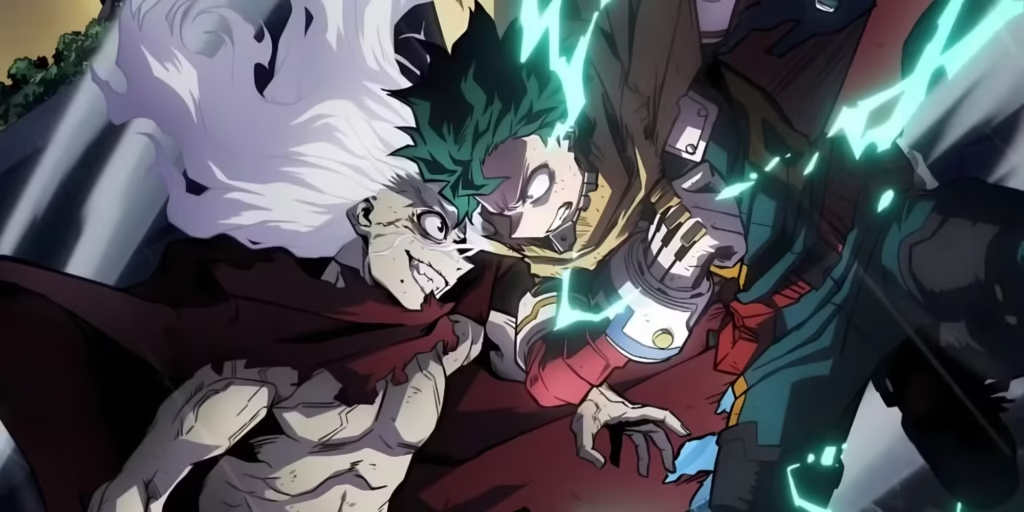
- Izuku Midoriya (Deku) vs. Tomura Shigaraki: The ultimate clash between One For All and the amalgamated Shigaraki/All For One is the centerpiece. Deku delves into Shigaraki’s mind to confront the innocent child (Tenko Shimura) at his core, underlining the tragedy of Shigaraki’s warped origin. The anime portrays this as a deeply emotional duel – Deku keeps fighting not just to win, but to save the part of Shigaraki that was a scared boy.
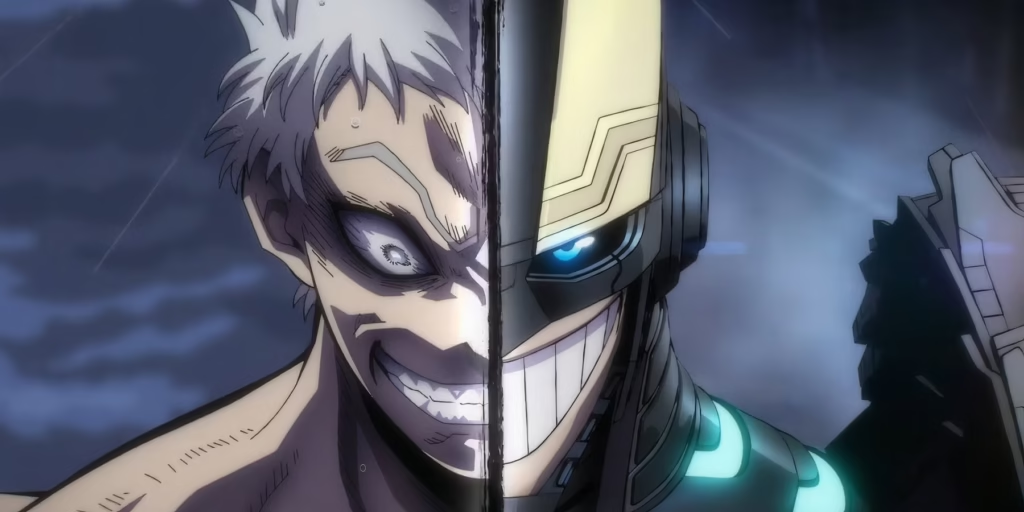
- All Might vs. All For One: In parallel, the weakened Symbol of Peace takes on All For One one last time. Now largely powerless, All Might fights with prosthetic enhancements and pure grit rather than Quirks. The animation emphasizes his determination; even after losing his own Quirk long ago, All Might battles using technology and hero spirit to counter All For One’s overwhelming powers.
- Supporting Battles: Meanwhile, the rest of Class 1‑A and Pro Heroes hold back armies of villains, and Katsuki Bakugo (critically injured in the war) plays a pivotal role. In a key moment Bakugo lands the punch that finally turns All For One back into a baby, sacrificing himself in the process. (Ultimately, Bakugo is revived through his Quirk and a friend’s intervention.) These scenes pay off long-running storylines and themes of sacrifice and legacy.
After the war’s climax, the story shifts to the aftermath and epilogue. Society lies in ruins but begins rebuilding on new ideals – even former villains like Lady Nagant and Gentle Criminal find their fates changed in the new world (as shown in the finale). Critically, the finale jumps eight years into the future: Class 1‑A graduates and becomes the top heroes of a more inclusive society, while Izuku Midoriya – having expended the last embers of One For All – works as a teacher at U.A. High. In this time-skip, we see each character’s outcome: many classmates are shown as celebrated heroes, and society at large has embraced heroism beyond Quirks. The season’s final scene is especially poignant: Izuku, now mentoring the next generation, is surprised when All Might (back in civilian form) presents him with a new armored hero suit funded by his friends (led by Bakugo). This technological suit allows Deku to resume hero work, bringing his journey full circle from Quirkless boy to hero once more.
The final episode’s epilogue shows Izuku “Deku” Midoriya years later (right) as a teacher, receiving an advanced new hero suit from All Might. This high-tech uniform – developed with help from classmates like Bakugo – allows Deku to continue as a pro hero despite losing One For All.
Anime vs. Manga: Resolving Controversies
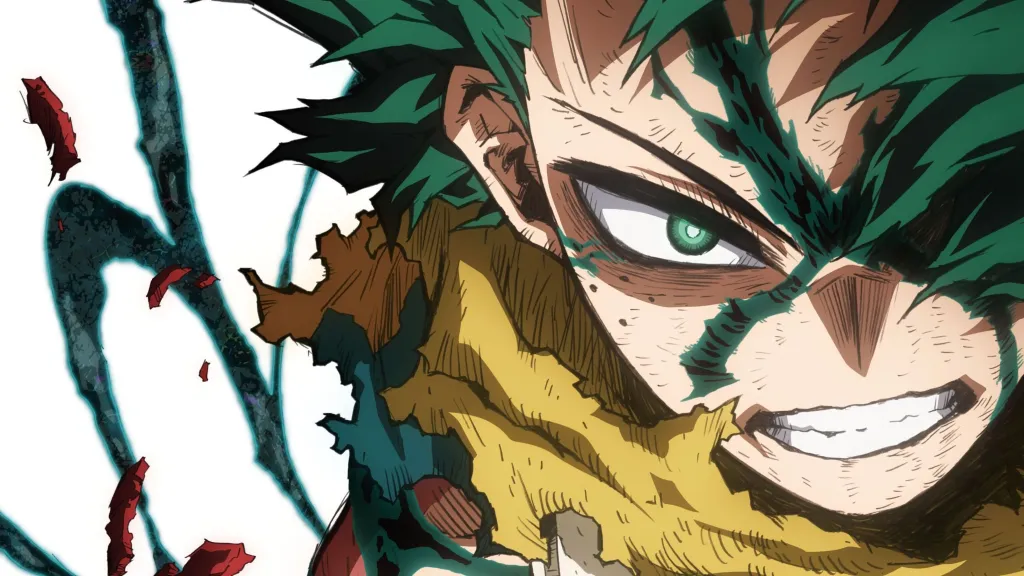
When the manga ended in August 2024, some fans felt the resolution was rushed or incomplete – most notably, Deku and Ochaco Uraraka’s relationship was left ambiguous, and the quick transition to Deku-as-teacher felt abrupt. The anime sought to smooth over those issues by expanding key scenes and pacing the epilogue more deliberately. In fact, Horikoshi worked closely with the anime team: he oversaw scriptwriting and provided new original scenes not in the manga. As a result, moments that were only hinted at on the page are given full weight on screen. For example, the anime devotes time to Uraraka’s emotional journey: the finale depicts Izuku catching Ochaco as she breaks down over the war’s toll, then explicitly telling her “you are my hero” – a tender scene that ties up their story more satisfyingly than the manga’s silence. Similarly, the classroom epilogue is fleshed out: viewers see Class 1‑A giving a farewell speech, interacting with new first-year students, and supporting each other through loss, making the 8-year leap feel earned.
- Added Scenes: The anime includes extra sequences (often small slice-of-life moments) during the epilogue. For instance, it shows Midoriya chatting with new first-year students and reuniting with classmates in casual settings, which underscores the characters’ bonds after the war.
- Emotional Payoff: By adjusting pacing and adding heartfelt animation, the finale gives emotional resonance to beats that felt abrupt in print. Deku’s acceptance of his role as a teacher and the celebration of each hero’s legacy are shown with close-ups, music, and voice acting. (Voice actor Daiki Yamashita’s performance as Deku in the climax, for example, has been widely praised for selling the bittersweet mix of hope and loss.)
- Resolution of Questions: The anime also takes care to address fan questions. Deku and Uraraka’s mutual feelings, Shigaraki’s true humanity (via his Tenko backstory), and even minor character outcomes are depicted more fully. While it doesn’t entirely rewrite the ending, the adaptation fills in gaps and gives additional closure where the manga’s 430-chapter tale had to move quickly. Critics note that Horikoshi’s active involvement helped ensure the final chapters played out more smoothly on screen.
Critical Reception
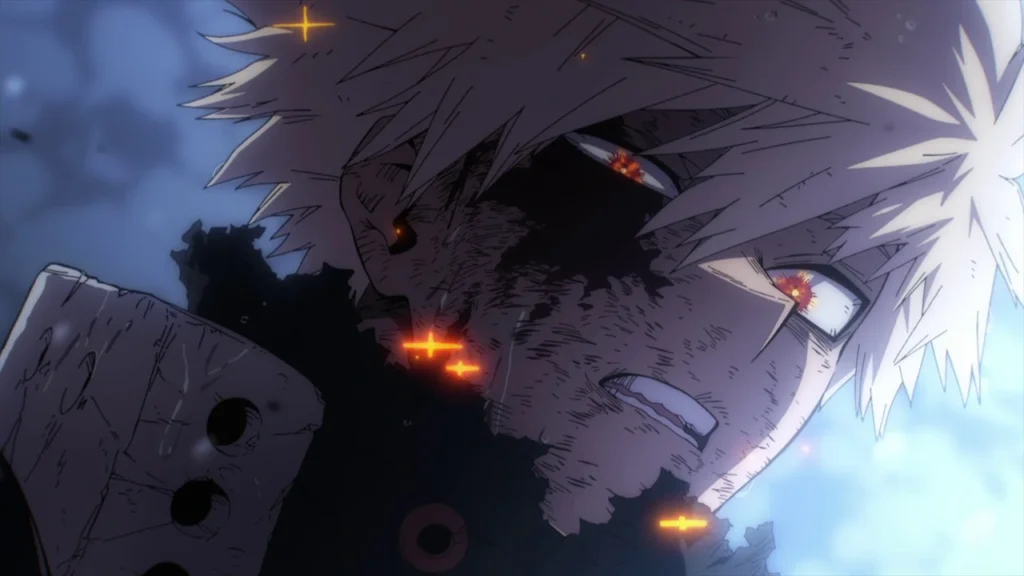
The response to the Final Season has been overwhelmingly positive. Many reviewers and fans are calling it one of the great endings in modern shonen anime. GamesRadar enthused that the finale “cements the anime as one of the all-time great[s]” of superhero storytelling gamesradar. The season’s high production values – from the spectacular animation of Deku’s final battle to the poignant scene of Izuku being suited up – have drawn particular praise. Fans on social media report that every episode of Season 8 has been rated exceptionally highly (often 9/10 or better), noting that the series “ended with a bang.” As GamesRadar observes, this “final run” of MHA was “more beloved than ever,” earning “some of the highest fan scores yet” for the franchise gamesradar. Even former critics concede that the anime’s careful pacing and strong voice work make the ending feel deserved.
Likewise, animation critics highlight the visceral spectacle of the Final War. The fusion of One For All and All For One powers, accompanied by a stirring score, has been called a visual highlight that rivals even the series’ feature films. Beyond visuals, the finale’s thematic core – the idea that “anyone can be a hero” – resonated strongly. By showing Deku teaching heroism while quirkless, then ultimately returning to hero duty through his own resolve (not by innate power), the anime underscores its signature message more powerfully than ever.
Summary
My Hero Academia’s Final Season delivered a respectful, high-quality send-off to Deku’s journey. With sharp animation and thoughtful pacing, it wrapped up the Final War and Epilogue arcs in a way that satisfies long-time fans. The climax and resolution stayed true to Horikoshi’s vision while expanding the emotional core, allowing character relationships and themes to land with full impact. Although some plot points (like Deku’s romance) remain ultimately subtle, the overall execution – bolstered by nostalgic music, standout voice performances, and extra scenes – provided the closure many viewers felt was missing from the manga.
In the end, My Hero Academia reminds us that heroism comes from within. Even when Deku loses his Quirk, his decision to teach and uplift others marks him a hero in spirit. The final gift of a new armor suit is symbolic: Deku has proven himself worthy of a second chance, not because of power but because of character. As the series closes, Izuku stands “tearfully accepting” this chance and moving forward with his classmates. It’s a fitting bookend to his story – from Quirkless boy to heroic teacher to beloved symbol of hope.
Sources: Authoritative announcements and anime databases confirm the season’s staff, release, and content wikipedia myheroacademia. Episode summaries and industry news (e.g. Crunchyroll announcements) detail the plot and Horikoshi’s involvement wikipedia. Critical reactions are reported by outlets like GamesRadar and industry press gamesradar gamesradar, reflecting the finale’s reception.